 Free UK Mainland Shipping.


Mastering the Guitar Capo for Acoustic Guitar – Essential Guide
A guitar capo for acoustic guitar is more than just a tool—it's a gateway to creative freedom. Whether you're a budding singer-songwriter or a seasoned guitarist, a capo lets you easily change keys, explore new voicings, and simplify complex chords without ever changing your finger positions. In this guide, we'll walk through everything you need to know about choosing the best capo for your acoustic (and even electric) guitar, integrating all essential insights to help you make the right pick.
What Is a Guitar Capo and How Does It Work?
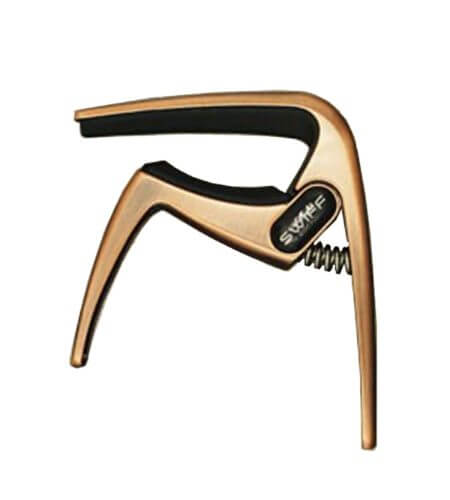
A guitar capo is a clamp-like device that presses down across all the strings on a fret, essentially creating a new nut position. This allows you to play open chords in different keys with ease.
Imagine you want to play a C major shape, but you want it to sound like D major. With a capo on the 2nd fret, that same shape will now produce a D major sound. This is invaluable for acoustic performers, especially when accompanying vocalists with limited ranges.
Whether you're using a guitar capo for electric guitar or acoustic, the core functionality remains the same—changing pitch without changing chord shapes.
Why Every Acoustic Player Needs a Capo
An acoustic guitar capo brings flexibility to your playing style. Here’s why every acoustic guitarist should consider keeping one in their gig bag:
-
Transposition Made Easy: Change keys without re-learning chord positions.
-
Simplify Difficult Songs: Some chords become simpler with capo use, making songs more accessible.
-
Enhance Creativity: Unlock new voicings and tonal textures.
-
Perfect for Singer-Songwriters: Adjust the pitch to suit your vocal range without compromising the song’s character.
A good capo for acoustic guitar can instantly make you a more versatile performer, letting you adapt quickly and keep your creativity flowing.
Guitar Capo for Acoustic Guitar vs. Electric Guitar
While you can technically use the same capo for both, differences in acoustic and electric guitar neck profiles, string gauges, and tension make some capos more suitable than others.
-
Tension: Acoustic guitars generally have thicker strings and higher tension, requiring a sturdier capo.
-
Neck Shape: Electric guitars may have flatter or thinner necks, so the capo must accommodate those differences.
-
Buzz Control: A capo that's great for electric may not press hard enough for acoustic, leading to fret buzz.
So, while a guitar capo for electric guitar can be used on an acoustic in emergencies, it’s wise to invest in a best capo for acoustic guitar to ensure optimal performance and comfort.
Types of Guitar Capos
Capos come in several types, and choosing the right one for your acoustic needs depends on your playing style, comfort, and budget.
-
Trigger-Style Capo:
-
Easy to use with one hand
-
Spring-loaded for quick changes
-
Popular among acoustic players for their ease and speed
-
Screw-Style Capo:
-
Offers precise tension control
-
Less prone to buzzing
-
Takes slightly more time to adjust
-
Wrap/Sleeve Style Capo:
-
Elastic or adjustable strap
-
Budget-friendly and light
-
Not ideal for live performance due to setup time
-
Partial Capo:
-
Covers only some strings for alternative tunings
-
Great for experimentation
-
Slide Capo:
-
Allows for quick key changes mid-song
-
Typically used in more complex setups
Each type serves its purpose. If you're looking for a good capo, the trigger-style is a reliable place to start.
What Makes the Best Capo for Acoustic Guitar?
Let’s talk about what to look for in the best guitar capo for your acoustic guitar:
-
Tension Balance: A capo should apply enough pressure to hold down all strings evenly, but not so much that it pulls them out of tune.
-
Build Quality: Look for a capo made from quality metal or composite that won't wear out quickly.
-
Padding: Rubber padding helps avoid damage to your fretboard and ensures buzz-free performance.
-
Design & Ergonomics: Choose one that fits comfortably in your hand and allows quick adjustment mid-performance.
-
Price vs. Performance: A good guitar capo doesn’t need to be expensive. Some budget-friendly models perform surprisingly well.
User Experience – Why Musicians Prefer Trigger Capos
Many players consider the trigger capo the best capo for acoustic guitar. It provides just the right balance of performance and practicality:
-
One-Handed Operation: You can reposition it in seconds.
-
Durability: Typically constructed with quality springs and padding.
-
Reliable Grip: Prevents buzzing even with thicker strings.
If you’re on the fence, start with a mid-range trigger capo and upgrade based on your evolving needs.
Additional Considerations for Serious Players
For more advanced guitarists or professionals, it’s worth exploring other aspects that contribute to the overall playing experience:
-
String Buzz Sensitivity: Ensure the capo evenly distributes pressure across all strings to prevent intonation issues.
-
Neck Radius Compatibility: Some capos are better suited to certain neck radii—check compatibility if you play higher-end guitars.
-
Locking Mechanisms: Some premium capos include a locking system that prevents slippage, a feature especially useful during long sessions.
-
Weight: Lightweight models are generally preferred for ease of handling and comfort.
Understanding how these technical aspects influence tone and playability can lead to more informed purchasing decisions and a better playing experience.

Guitar Capo for Acoustic Guitar – Techniques, Use Cases & Top Picks
Continuing our in-depth guide on the guitar capo for acoustic guitar, this part dives into advanced techniques, specific genre applications, maintenance tips, and expert recommendations. Whether you're just starting out or refining your technique, these insights will help you fully master this indispensable accessory.
Mastering Capo Techniques
To unlock the full potential of your acoustic guitar capo, understanding advanced techniques is crucial:
-
Chord Voicing Exploration: Move the capo up and down the neck to discover brighter or warmer tones while using the same chord shapes. This can drastically change the mood of your song.
-
Complementary Capoing: In a duo setting, have one guitarist play open chords while the other uses a capo in a different position. This adds depth and contrast.
-
Partial Capo Creativity: Use a partial capo to simulate open tunings without actually re-tuning the guitar. It opens up new harmonic possibilities.
-
Capo + Drop Tuning: Combine capoing with drop tuning for unique sounds in modern acoustic styles.
Experimenting with your guitar capo for electric guitar or acoustic models in this way can give your music a fresh, personalized edge.
Genre-Specific Applications
Capos are used in nearly every genre of music, but they shine particularly bright in:
-
Folk: Essential for quick key changes and traditional voicings.
-
Pop/Rock: Popular among singer-songwriters for dynamic key modulation.
-
Country: Ideal for alternate tunings and fingerstyle runs.
-
Worship Music: Helps match the vocal range of congregations and worship leaders.
-
Indie/Alternative: Often used to create signature soundscapes and textures.
These genres benefit from the ability to use good capo for acoustic guitar playing to match vocals and style without sacrificing tonal quality.
Comparing Capos: Electric vs. Acoustic Guitar
While we've highlighted this in Part 1, it's worth reinforcing:
-
A guitar capo for electric guitar should accommodate thinner necks and lower string tension.
-
An electric guitar capo often has lower tension springs to prevent over-clamping.
-
The best capo for acoustic guitar requires stronger grip, usually found in spring-loaded or screw-based models.
A hybrid capo that handles both guitar types is ideal for versatile musicians, but make sure it doesn't compromise on grip or comfort.
Choosing the Right Capo by Playing Style
If you're wondering which capo is the best guitar capo for your needs, consider your playing environment:
-
Studio Musicians: Prioritize intonation accuracy and ease of use. Screw-style capos are preferred.
-
Live Performers: Quick-change trigger capos make transitions seamless on stage.
-
Beginner Guitarists: Look for a good guitar capo that balances affordability with quality. Trigger or wrap-around types work well.
-
Advanced Players: Consider investing in premium capos with enhanced pressure control and ergonomic design.
No matter your skill level, using a good capo suited to your needs elevates your overall performance.
Capo Maintenance and Longevity Tips
To ensure your capo remains a dependable tool:
-
Clean Regularly: Wipe the rubber padding with a soft cloth to prevent grime build-up that can affect grip.
-
Store Safely: Don’t leave your capo clamped on the headstock or fretboard when not in use.
-
Inspect Tension Mechanism: Springs and screws can wear out—keep an eye on functionality.
-
Avoid Excessive Pressure: Over-clamping can damage your strings and fretboard.
Keeping your best capo for acoustic guitar in top condition ensures consistent tone and performance.
Our Top Picks for Guitar Capos
Here are our recommendations across a range of budgets and skill levels:
-
Budget-Friendly: Kyser Quick-Change or Donner DC-2 Trigger Capo – Great for beginners or casual players.
-
Mid-Range: Shubb C1 or G7th Performance 3 Capo – Ideal balance between functionality and price.
-
Premium: Thalia Capo 200 Series – Elegant design, customizable, and superior grip.
-
Best for Electric Guitar: D'Addario NS Artist Capo – Slim profile with precision adjuster for lower string tension.

Each of these models qualifies as a good guitar capo or even the best capo in its price tier. Be sure to check product details to match your guitar's neck profile and string gauge.
Final Thoughts: Making the Most of Your Capo
A guitar capo for acoustic guitar isn’t just an accessory; it’s a doorway to tonal exploration, songwriting ease, and performance flexibility. Whether you're looking for a good capo for acoustic guitar, a dual-purpose electric guitar capo, or simply the best guitar capo overall, the right choice will elevate your sound.
By combining the right gear with creative capo use, you can unlock sounds and songs you never thought possible. Take the time to experiment and find your perfect match.


